
A Recovering Tool Collector’s Guide to Buying What You Actually Need
I consider tool buying one of the great benefits of being a woodworker. It’s something of a side hobby and a guilty pleasure. Whether you’re scoping out the local flea markets hoping to find old Stanley Bailey #4 in need of some love, or waiting for that shiny new 3HP Sawstop to go on sale at your local Woodcraft, tool lust is something nearly all of us experience at some point. Don’t believe me? Go to Youtube. The most viewed videos are usually spec sheet “algorithm bait” tool reviews. And I can tell you as a content creator myself, my most successful videos are tool reviews and shop tours. People love tools! It’s enough to make you wonder if this little side hobby is threatening to replace the actual hobby.
That said, I completely understand the appeal. Tools are fun. They allow us to do things we just can’t do with our bare hands. Obviously. And in woodworking they allow us to take raw material and transform it into anything our imagination can cook up. If you really think about it, tools can often represent the woodworker we want to become instead of reflecting the woodworker we currently are.
The problem is that new woodworkers often buy tools before they even know what they’ll be building. That seems backwards.
There Is No Universal Starter Shop
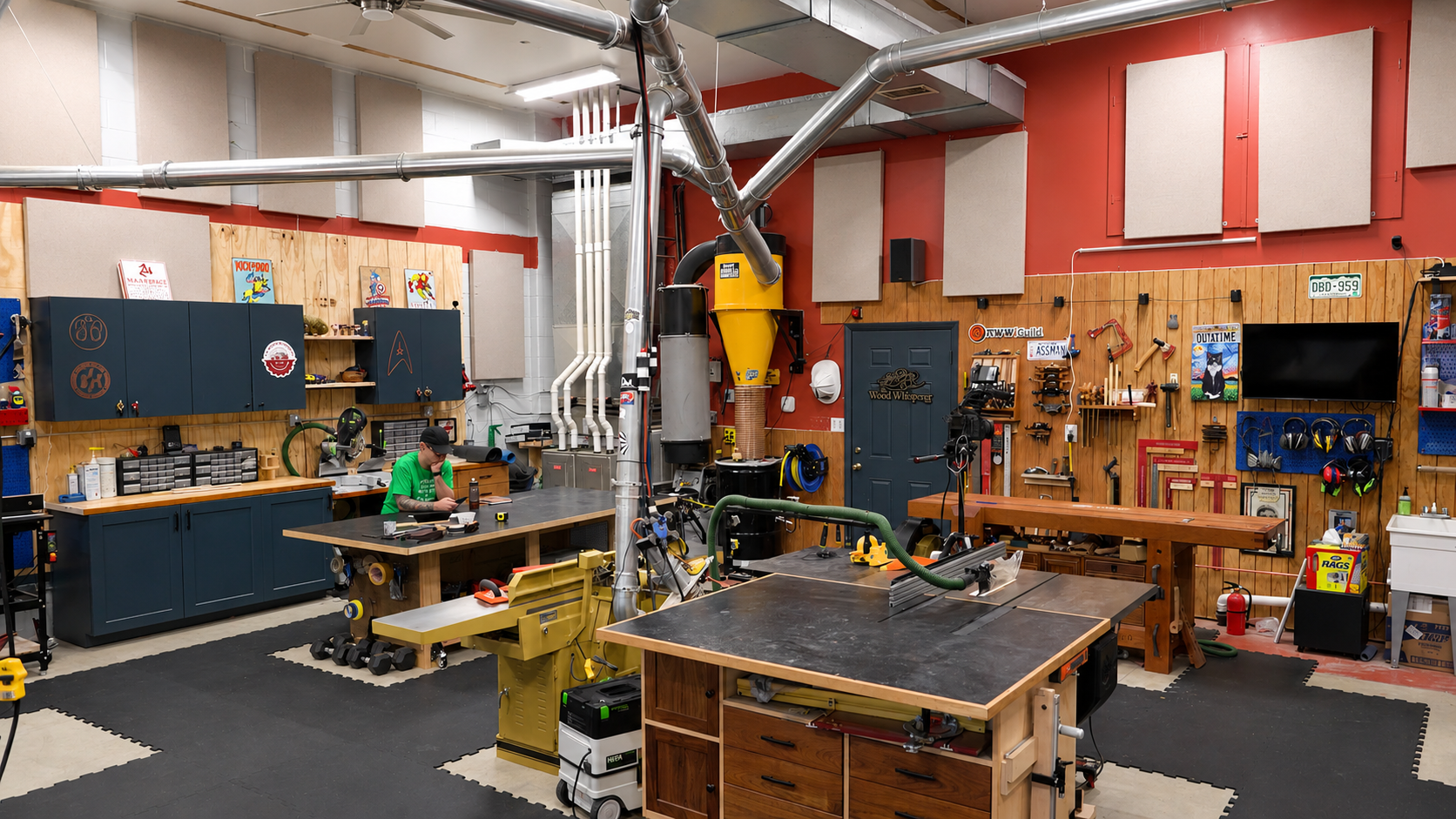
New woodworkers often ask me what tools they should buy. Many literally want me to make a list for them. Sometimes, a more established woodworker will ask which tool they should buy next after listing out everything they own. While I try to answer these questions based on what little info I have, I’m usually just taking shots in the dark. As far as I see it, tool choices often come down to three simple variables: budget, space, and the things we plan to build. Most emails don’t include that additional information.
And while all three variables are important, I’d say knowing what you want to build is the most crucial. A person who wants to turn bowls needs a different setup than someone who wants to build boxes. A chair-maker has different tooling needs than a cabinetmaker. And a builder who wants to create a side hustle batching out epoxy charcuterie boards has very different needs than someone making one Maloof rocking chair a year.
That’s why I always say that the project should drive the tool purchase. Unfortunately, many of us do exactly the opposite. We buy a tool, then search for a project that justifies it. And I’m not pointing fingers here as I’m guilty of it too. Sometimes it works out, and sometimes the tool sits in a corner while I eventually come to terms with the fact that I bought a very expensive paper weight.
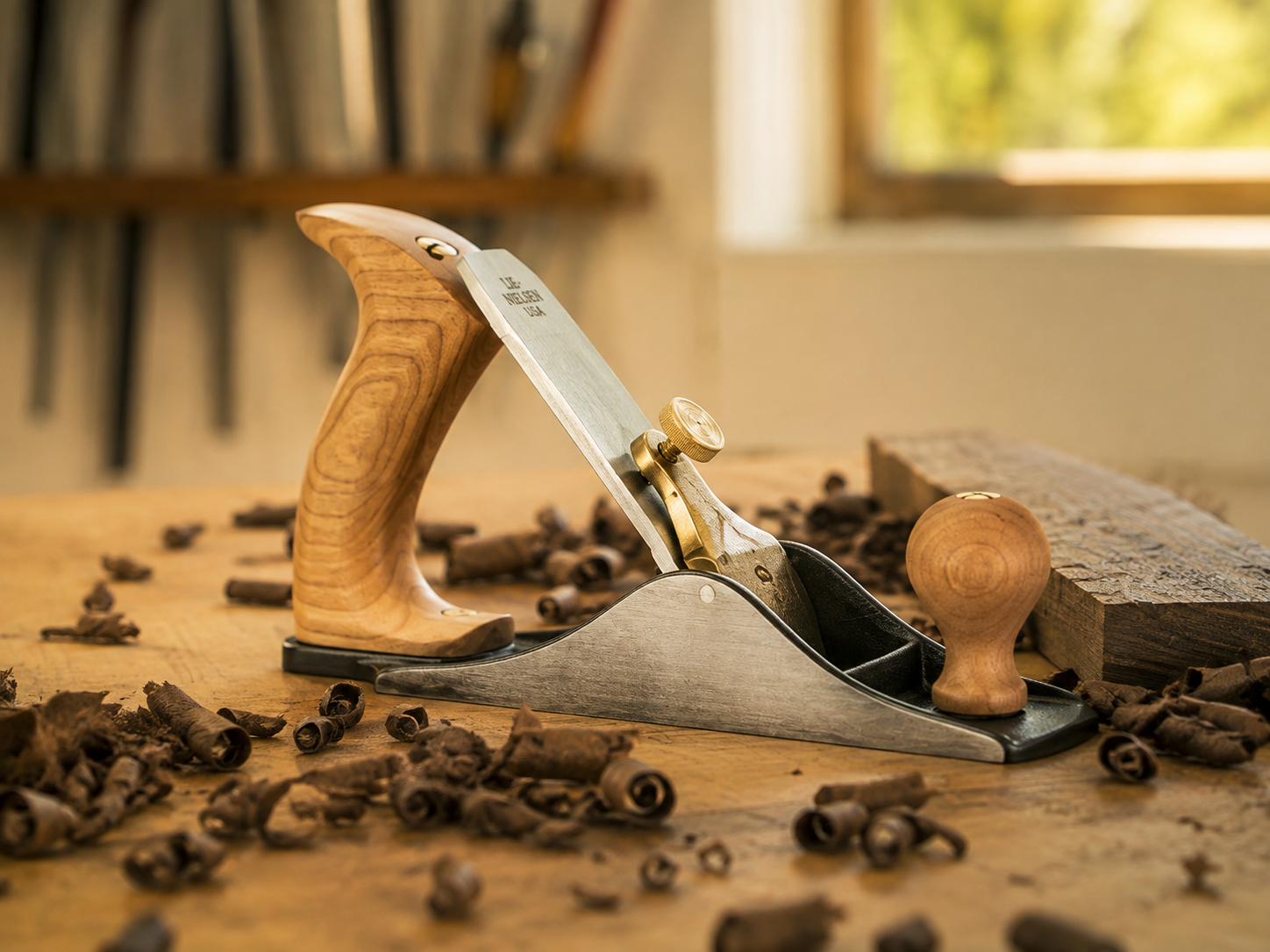
Story time! Back in 2004, with thick sideburns and a soul patch to match, I found myself craving hand tools. The wise folks in the forums told me Lie-Nielsen was “the best” but I had no budget for that level of tool. So when I saw a LN plane pop up on Ebay for a reasonable price, I snatched it up. The package arrived and I immediately ripped it open, only to be incredibly disappointed. From the pictures in the listing, I assumed this was just another bench plane. After a little research, I realized my mistake: I just bought a scrub plane. If you’re not familiar, a scrub plane is used for heavy stock removal. It’s basically the first plane you use when you’re milling rough lumber. The body is narrow and the blade has a substantial curve so that you can really dig away the shavings. But as the owner of a small second-hand jointer and a lunchbox planer, I had no intention of rough milling boards by hand. I held onto the plane for years in hopes that I’d find a use for it but I eventually sold it. Thankfully, Lie Nielsen tools generally hold their value so I was able to get my money back.
Buy Solutions, Not Possibilities
So what can we do if we want to start making better tool-buying choices? Perhaps we should start by asking ourselves, “What problem does this tool solve?” If you can’t name a problem, it may not be the right time to buy.
That may sound simple, but marketers and influencers make their money selling possibilities and overstating small gains. “Your work is going to be so much better when you use this red square!” “Imagine what you could make with this hand-powered CNC!” “With this 5HP bandsaw, the lumber will practically mill itself!”
Those marketing messages are powerful and the can certainly convince us to buy things we don’t really need. The ads promise a better shop experience and sometimes even a better version of ourselves. That’s getting a little deep, but I think most woodworkers really do want to improve, and tool marketing often suggests that buying the right thing can speed up that process. But if the tool has nothing to do with the work that’s actually in front of you today, you may be buying a solution to a problem you’ll never have. And if you’re upgrading a tool you already own, a small gain may not actually change the final result at all.
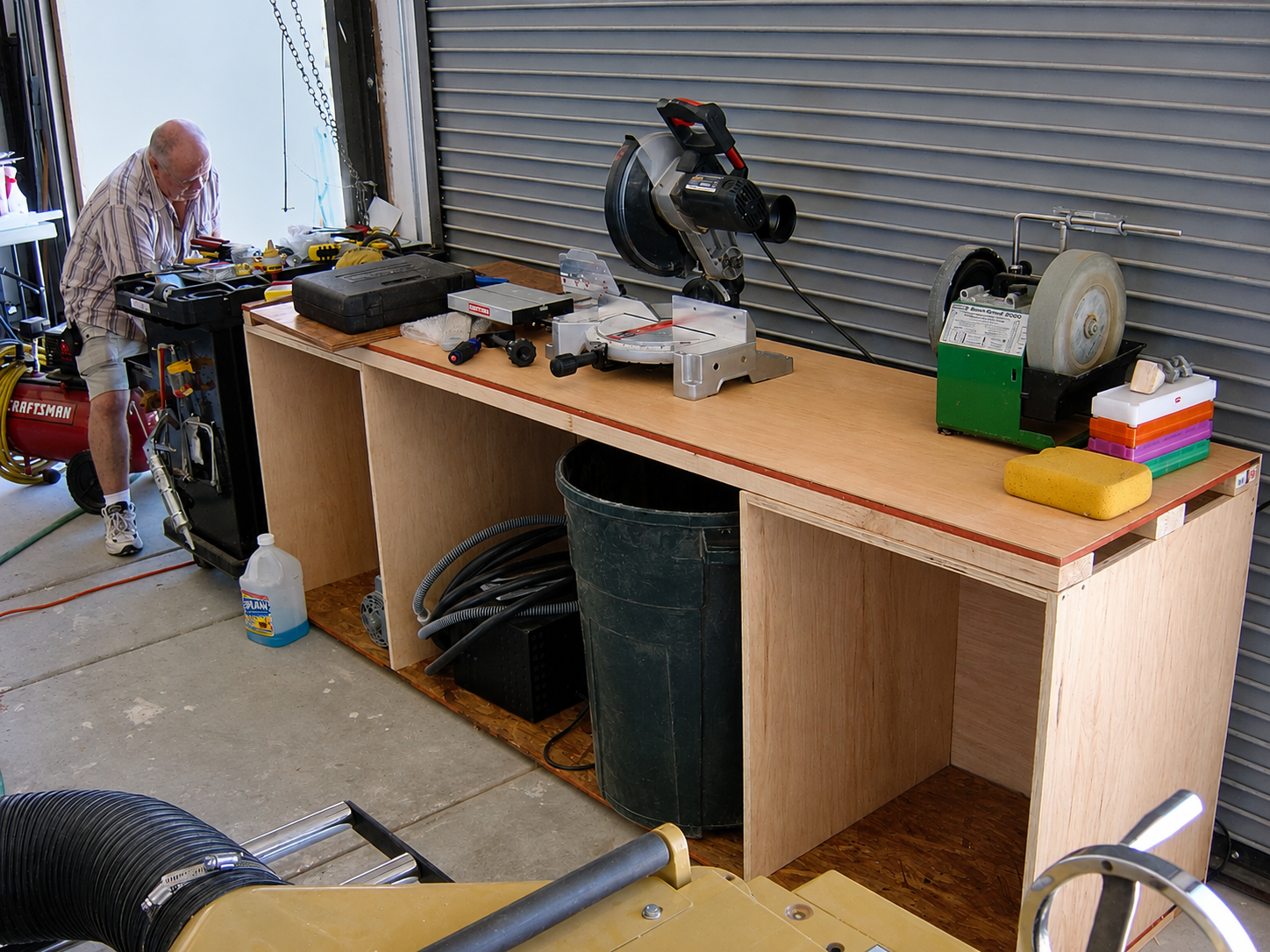
Here’s an example of how I think tool buying should go. When my first home needed new flooring, baseboards, and window casing, I had a clear reason to buy a decent miter saw. It not only helped me finish those DIY projects, it also became incredibly useful as I discovered woodworking as a hobby and I used it on countless projects. The project justified the tool. The tool did not have to justify itself by creating projects.
Avoid Redundancy – Not Just A Hybrid Woodworker’s Problem
In hybrid woodworking, we keep one foot in the power-tool world and the other in the hand-tool world. That gives us plenty of options, but it also creates a potential problem: redundancy.
Using my earlier scrub-plane story as an example, if you already own a jointer and planer, you probably don’t need a scrub plane. If you cut most of your joinery with a table saw and router, you may not need a full set of rip and crosscut saws. If you prepare surfaces with scrapers and sanders, a No. 4 smoothing plane may not offer much benefit.
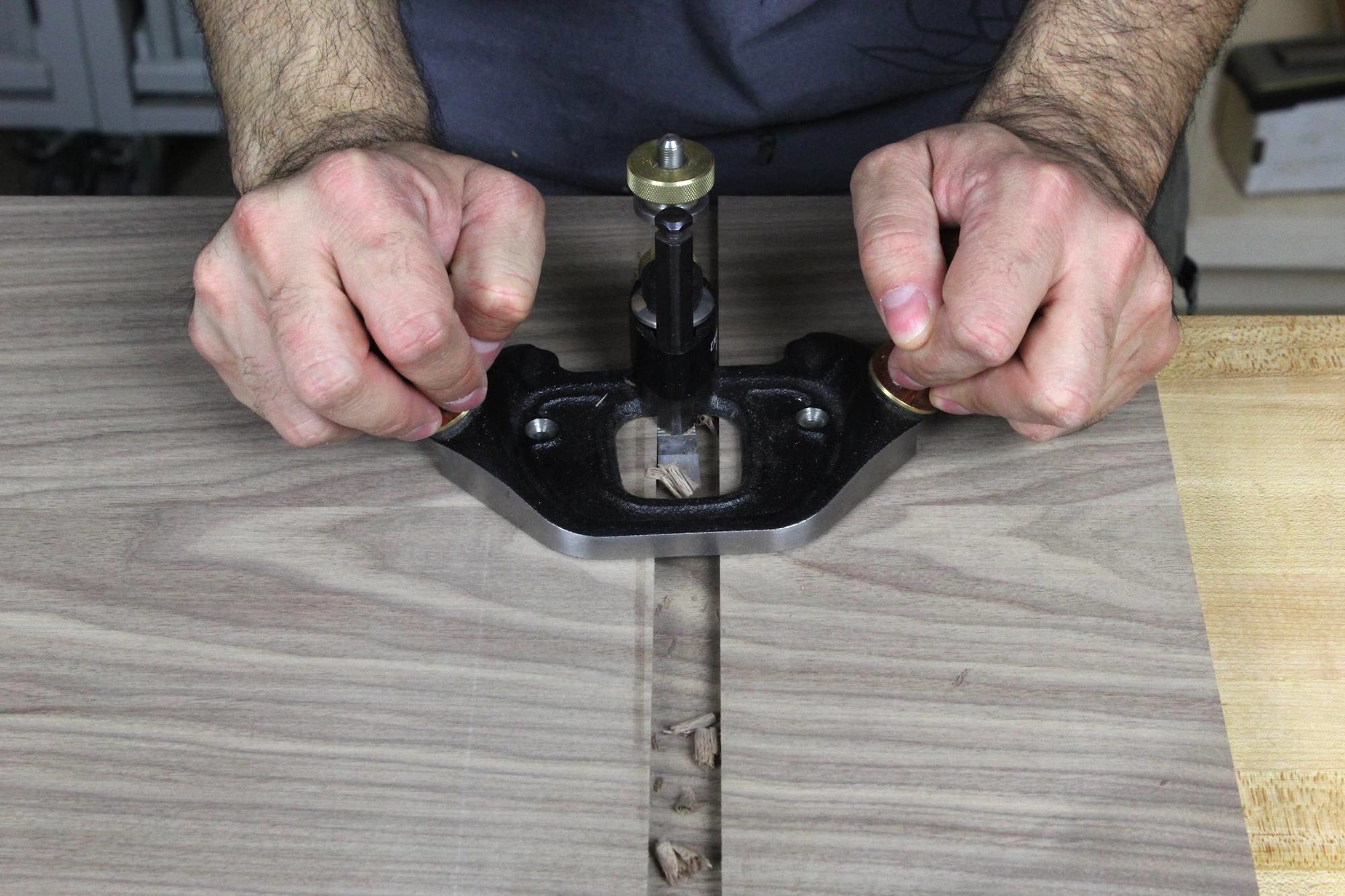
On the other hand, some hand tools fit perfectly into a power-tool shop because they add an additional degree of control. A shoulder plane can fine-tune a tenon cheek after the table saw does the bulk of the work. A router plane can flatten a dado or rabbet after a machine cuts it. These tools are there to complement your power tools, not necessarily replace them.
Redundant tools waste money and contribute to analysis paralysis. If you have multiple ways to accomplish a task, you can sometimes be frozen with indecision as you try to decide the best way to go about it. Life is often simpler when you have just one good solid solution.
This problem certainly isn’t limited to hybrid woodworkers either. I know hand tool woodworkers that have multiple bench planes that do the same job, each tuned for slightly different action. I also know many power tool junkies that have six routers, each outfitted with a different bit so they don’t have to swap. Whatever your preference, the question remains the same: Does this tool add a useful new capabilities or does it merely give you another way to do something you can already do?
Speaking of hybrid woodworkers, this is where I shamelessly mention my book, Hybrid Woodworking. The book explores how I combine hand tools and power tools for a more harmonious and rewarding experience in the shop, all with a focus on not accumulating tools you don’t really need.
Don’t Wait for the Perfect Shop
New woodworkers often delay building because they think the shop needs to be “complete” first. Bad news, Bubba…the shop will never be complete. After almost 25 years of woodworking, my shop changes as my work, space, interests, and budget evolve. That’s really not a problem, though. A good shop should adapt to the woodworker using it.
Videos and ads often show us large shops filled with every tool imaginable. If that’s your main view into the world of woodworking, it’s easy to assume you need all of that stuff before you can build anything worthwhile. But in my opinion, the smartest tool choices will naturally come as a byproduct of building, not just planning at the keyboard.
And it’s the projects that show you where the real gaps are. Maybe you’re having trouble getting square corners cuts on your casework. It might be time for a track saw. Perhaps your fixed-base router cuts profiles just fine, but now you want to make mortises. It might be time for a plunge router. Or maybe your sander works well, but its built-in dust bag doesn’t. That could justify a shop vac or dedicated dust extractor.
The more projects you get under your belt the better you’ll be at telling the difference between a real need and a tool you simply want. And for the record buying a tool because you want it is perfectly fine. It’s your money. But I do think we should always avoid deluding ourselves into thinking that certain wants are actually needs.
A Tool Problem or a Skill Problem?
New woodworkers often delay building because they think the shop needs to be “complete” first. Bad news, Bubba…the shop will never be complete. After almost 25 years of woodworking, my shop changes as my work, space, interests, and budget evolve. That’s really not a problem, though. A good shop should adapt to the woodworker using it.
Videos and ads often show us large shops filled with every tool imaginable. If that’s your main view into the world of woodworking, it’s easy to assume you need all of that stuff before you can build anything worthwhile. But in my opinion, the smartest tool choices will naturally come as a byproduct of building, not just planning at the keyboard.
And it’s the projects that show you where the real gaps are. Maybe you’re having trouble getting square corners cuts on your casework. It might be time for a track saw. Perhaps your fixed-base router cuts profiles just fine, but now you want to make mortises. It might be time for a plunge router. Or maybe your sander works well, but its built-in dust bag doesn’t. That could justify a shop vac or dedicated dust extractor.
The more projects you get under your belt the better you’ll be at telling the difference between a real need and a tool you simply want. And for the record buying a tool because you want it is perfectly fine. It’s your money. But I do think we should always avoid deluding ourselves into thinking that certain wants are actually needs.
It can be tempting to try to buy your way out of these problems. I’ve done it too many times. A new or upgraded tool feels productive because it appears to offer a shortcut. Why spend all weekend tuning an old bandsaw when you could buy a better one? Well, because the new bandsaw will eventually need tuning too. Even if it cuts perfectly out of the box, blades wear out, guides move, fences shift, and the saw will eventually require calibration. If you avoid learning those skills now, buying a new machine only postpones the inevitable. Embrace your inner Snodgrass!
A Better Tool-Buying Rule
Hindsight is 20/20, so here’s the advice I wish I would have known from the start: buy tools when a real project creates a need. Of course, if you have the budget and simply want a particular tool, I’m not here to dissuade you. You do you, boo. But if you’re watching your budget and you value your time, this advice will serve you well.
When a project does create a need for a new tool, be sure to research the entire class of tool and not just focus on the current brand darlings of the internet. If you watch video reviews, don’t settle for the first one the algorithm feeds you, unless it’s mine, of course. The videos at the top of the search results aren’t always the most useful. Dig deeper. Some of the best advice will come from people with low subs, poor audio, and ordinary garage/basement shops. These are real people who have spent real time using the tool and they purchased the tool with their own money. Also make sure you’re looking at both the new and used market. eBay and Facebook Marketplace can be hit or miss, but good deals are still out there. And before buying anything, do a quick examination of whether a tool you already own could solve the current problem with a simple modification or a jig.
Even if you follow my advice, you’ll still buy tools you regret. That’s part of learning what kind of woodworker you really are. As your skills grow, your interests and methods will change. Your tool collection will likely change with them. The good news is that this process slows down as you get older, crankier, and more set in your ways. Eventually, you realize that you already own nearly every tool you need. Your true limitations will be the number of hours in the day and an angry sciatic nerve that keeps nagging you.
The goal shouldn’t be to own a picture-perfect state-of-the-art shop. It really should be to learn new skills and build things. If a new tool helps you build something you already intended to make, then buy it. If it only helps you imagine what you might make in the future, it might be better to hold off on the purchase.
Or ignore me. It’s your shop and your money. No matter what you do, make sure you’re having fun.